|
Second International Workshop on
Analytics, Telemetry, and Cybersecurity for HPCC (WATCH 2026)
The Hague, The Netherlands
(November 15, 2026) (in conjunction with ACM CCS 2026
|
Workshop Program
For in-person room information, please check the conference schedule/agenda.
Program order subject to change.
WATCH 2026 Co-Chairs: Massimo Cafaro, Eric Chan-Tin, Jerry Chou, Jinoh Kim
|
Opening
9:00am - 9:05am
|
Jinoh Kim
|
|
Keynote Speech
9:05am - 10:00am
|
Keynote Presentation
Dr. Yuseok Jeon, Korea University
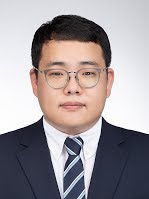
Title: Practical Memory and Type Bug Detection Approaches for Systems Languages
Abstract: C/C++ and Rust are widely used for their performance and low-level control,
but they remain exposed to persistent memory and type bugs that can cause serious security incidents.
In this talk, I introduce three recent approaches we developed to address these bugs efficiently and
effectively. First, CMASan targets custom memory allocator-related memory bugs in C/C++—a common
blind spot for existing sanitizers—by analysing and handling allocator-specific memory operations
and corruption patterns. Second, Type++ provides a further efficient approach to detecting type
confusion bugs with minimal performance overhead, making runtime protection more practical. Lastly,
ERASan targets memory bugs that occur within Rust unsafe-related regions, offering an efficient
detection approach despite Rust’s overall memory-safety design.
Bio: Yuseok Jeon is an Associate Professor in the Department of Computer Science and Engineering at Korea University.
He has about six years of work experience across companies and research institutes in both the US and South Korea,
such as the National Security Research Institute (NSRI), Samsung Research, NEC Labs America, and Intel.
His research mainly focuses on addressing software and systems security challenges through sanitization,
fuzzing, and AI-based techniques. He actively serves on program committees for top-tier security conferences,
including USENIX Security, IEEE S&P, ACM CCS, and NDSS, and contributes to leading journals (e.g., ACM
Computing Surveys as an Associate Editor). His research has been published in top venues —including CCS,
S&P, NDSS, and USENIX Security— and has received several awards, including the CERIAS Diamond Award
and NDSS 2025 Distinguished Paper Award.
|
|
Coffee Break
10:00am - 10:45am
|
|
|
Technical Session 1
Chair: Jinoh Kim
10:45am - 12:00pm
|
From Alerts to Causes: Backtracing of Security Events with Metric Temporal Logic by R. Garcia, A. Lahmadi, C. Sala
Mitigating Physical Threats to AI Supernodes with Dynamic Trust Domains by L. Perugini, K. Struczynski, X. Peng, S. Vlasceanu, B. Crispo
Foundation Models for Trajectory-based UAV Location Integrity Checks by I. Alegbeleye, S. Kim, S. Chang, J. Kim
|
|
Announcement and Social
12:00pm - 12:30pm
|
|
|
Lunch
12:30pm - 1:30pm
|
|
|
Technical Session 2
Chair: Junia Oliveira
1:30pm - 2:45pm
|
Canary-Based Inter-VM RowHammer Defense with Attacker-VM Identification in Cloud Environments by H. Kawasaki, S. Akiyama
TraceLock: Verified Streaming Evidence for Linux Telemetry by S. Ghimire
Processor Telemetry for Learned Code-Reuse Attack Detection: Evidence from ARM and RISC-V by J. Oliveira, A. Musa, E. Parisi, F. Barchi, A. Acquaviva
|
|
Closing
2:45pm - 3:00pm
|
|
The productivity and trustworthiness
of computing systems are increasingly hindered by a multitude of challenges, including
system misconfigurations, insufficient engineering practices, and the escalating
complexity and scale of modern computing systems and applications. More critically,
malicious adversarial events, such as cyberattacks, data breaches, and other forms of
cyber threats, significantly undermine the reliability, robustness, integrity, and
security of systems and applications. Ensuring the systems' and applications' correct
operational states through effective monitoring, measurement, analysis, and diagnosis
is crucial to maintaining optimal performance, reliability, resilience, and security in
computing tasks. This includes detecting and responding to potential security threats,
identifying and mitigating performance bottlenecks, and ensuring the overall integrity
and trustworthiness of computing systems and applications.
This workshop aims to provide a dedicated
platform for researchers, practitioners, and industry experts to discuss cutting-edge
topics on analytics, telemetry, and cybersecurity for high performance computing and
communications (HPCC). We encourage submissions that explore novel methodologies, tools,
and practices for monitoring and analyzing the status of computing systems and applications,
including the detection and response to potential security threats, performance bottlenecks,
and other operational issues. We also invite contributions that enhance observability and
visibility, strengthen resilience and security, and improve the overall trustworthiness of
heterogeneous computing and communication environments. Additionally, we seek contributions
that address the challenges and opportunities presented by emerging technologies and trends,
such as artificial intelligence (AI), machine learning (ML), Internet of Things (IoT), cloud
computing, and edge computing, from the perspective of security principles and objectives.
This includes exploring the potential risks and benefits of these technologies, identifying
novel attack vectors and vulnerabilities, and developing innovative solutions to mitigate
these threats and ensure the security, resilience, and integrity of emerging computing systems
and applications.
Topics of Interest (but not limited to)
- Real-time monitoring and operations: Approaches for scalable monitoring and operations for high performance computing and communications.
- Performance analysis and diagnostics: Techniques for analyzing and diagnosing performance issues in systems, networking, and applications.
- Security and performance metrics: Integration of security indicators with performance metrics to ensure secure and efficient computing.
- AI/ML-driven methodologies: Applications of artificial intelligence and machine learning for measurement, analysis, detection, and response in computing systems.
- IoT and cloud computing security: Security challenges and solutions for Internet of Things (IoT) devices, cloud computing environments, and other emerging technologies.
- Security information and event management (SIEM): Methods and tools for collecting, analyzing, and responding to security-related data from various sources.
- Malware analysis and detection: Techniques for analyzing and detecting malware, including zero-day attacks and advanced persistent threats.
- Digital forensics and incident response: Methods and tools for conducting digital forensics investigations and responding to security incidents.
- Security and privacy in emerging technologies: Security and privacy challenges and solutions for emerging technologies, including blockchain, artificial intelligence, and machine learning.
- Best practices for resilient computing: Guidelines and strategies for improving performance and resilience in high performance computing and communication environments.
All papers must be original and
not simultaneously submitted to another journal or conference. Authors are
invited to submit either a full (max 8 pages) paper or a short/work-in-progress
(max 5 pages) paper. Papers will be peer-reviewed, and accepted papers will be published in the workshop proceedings as part of the ACM digital library.
Besides the page limit, we adhere to the conference submission policy—including paper format and blinded review - as outlined at: https://www.sigsac.org/ccs/CCS2026/call-for/call-for-papers.html/
Submission link:
https://watch2026.hotcrp.com/paper/new
- Submission deadline:
July 17, 2026 August 28, 2026 AOE (Anytime ON Earth)
- Author notification:
August 21 September 4, 2026
- Camera-ready deadline: September 11, 2026
- Workshop: November 15, 2026
- Stergios Anastasiadis, University of Ioannina, Greece
- Sang-Yoon Chang, University of Colorado - Colorado Springs, USA
- Ming-Hung Chen, IBM, USA
- Chunglae Cho, ETRI, Korea
- Italo Epicoco, University of Salento, Italy
- Hsiang-Jen Hong, Western Washington University, USA
- In Kee Kim, University of Georgia, USA
- Alina Lazar, Youngstown State University, USA
- Chul-Ho Lee, Texas State University, USA
- Che-Rung Lee, National Tsing Hua University, Taiwan
- Dongeun Lee, Texas A&M University, USA
- Amir H. Payberah, KTH Royal Institute of Technology, Sweden
- Marco Pulimeno, University of Salento, Italy
- Alex Sim, Lawrence Berkeley National Laboratory, USA
- K. John Wu, Lawrence Berkeley National Laboratory, USA
- Yu-Sung Wu, National Yang Ming Chiao Tung University, Taiwan
- Massimo Cafaro, University of Salento, Italy
- Eric Chan-Tin, Loyola University Chicago, USA
- Jerry Chou, National Tsing Hua University, Taiwan
- Jinoh Kim, East Texas A&M
University, USA
Keynote Speaker:
Dr. Yuseok Jeon
Papers will be peer-reviewed, and
accepted papers will be published in the workshop proceedings as part of the ACM
digital library.
The conference will be held
in conjunction with ACM CCS 2026.
All questions about submissions
should be emailed to WATCH.miniconf@gmail.com.
|